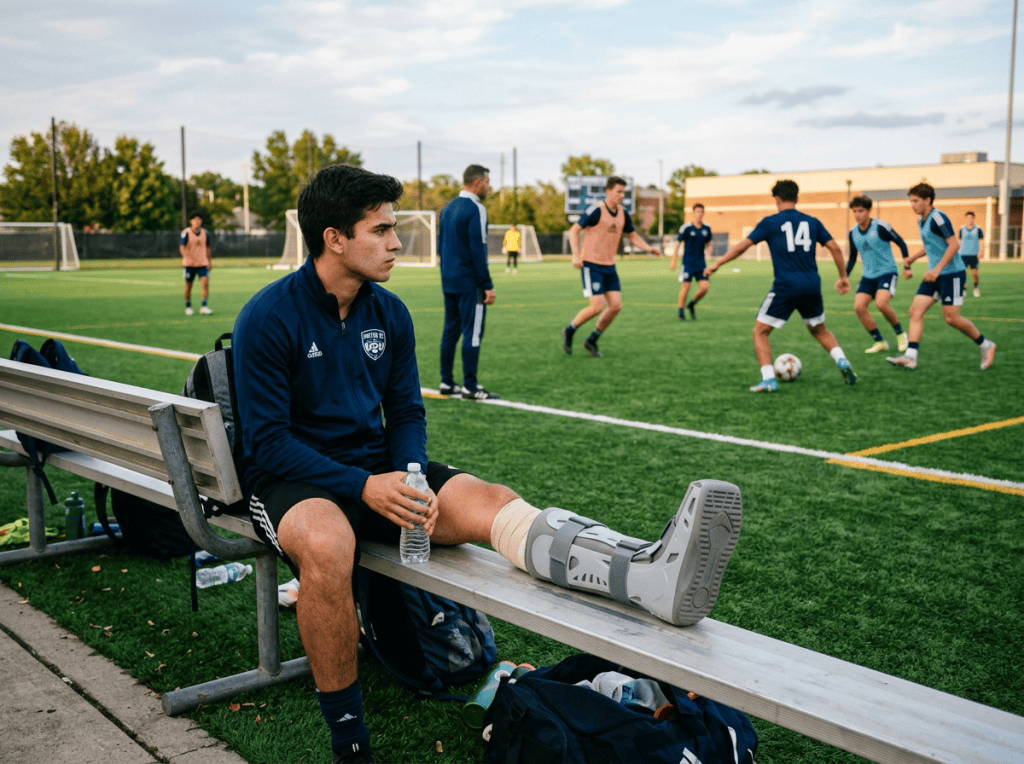
As someone who has played varsity baseball and football, sports have been a huge part of my high school life. I’ve already written a blog about preventing physical sports injuries, but there’s another part of getting injured that we don’t talk about enough: what happens mentally when the sport you love suddenly gets taken away. For athletes, sports can become part of your identity. Practices take up so much of your day, your teammates become some of your best friends, and you are always thinking about the next game, season, or personal record. Then an injury can suddenly stop all of it.
Even if the injury is temporary, an athlete can go from practicing every day to sitting on the side watching everyone else improve. On top of worrying about healing, there’s the worry of losing your position or coming back slower than before. You feel like all the work you’ve done just went to waste.
I think coaches can play an important role here. When I coached younger kids at the West Orange Rec Center, I learned that coaching isn’t only teaching somebody how to play a sport. You’re also teaching confidence, discipline, and how to deal with setbacks. Those kids are always looking up to you.
That matters when somebody gets hurt. Preventing injuries should always be the goal, but when injuries happen, recovery shouldn’t only focus on the physical part. An athlete isn’t just a knee, shoulder, or ankle that needs to heal. There’s a person attached to it.

