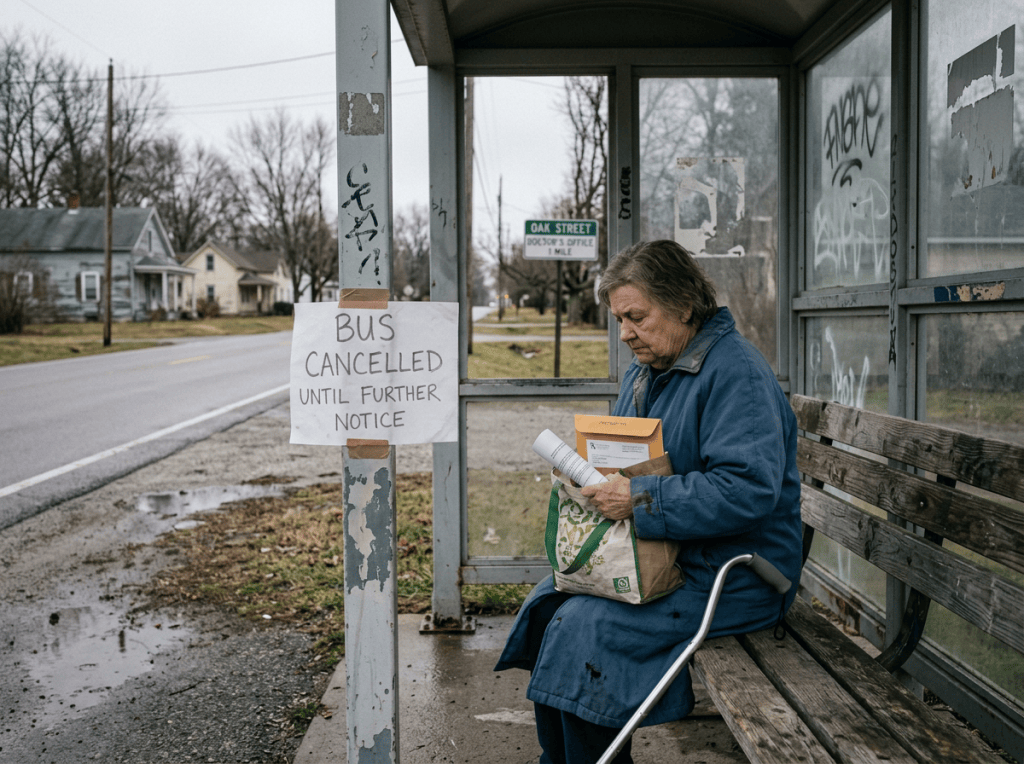
Imagine your doctor tells you that you need to come back to see them in three months. Pretty simple, right? Not necessarily. What if you don’t have a car? That appointment might mean finding someone who can drive you, paying for a ride, taking extra time away from work, or deciding that going the see the doctor again is too much trouble. This is exactly what I mean when I talk about health happening outside a hospital.
Transportation isn’t a medicine. It isn’t a screening test. It isn’t a doctor. But whether someone has transportation can decide whether they reach these things. This especially matters for people who need repeated care. Someone managing a chronic condition like diabetes might need regular appointments, lab work, therapy, medication, or visits to specialists. Missing one appointment might not seem like a huge deal, but it can be. It also shows why calling people “noncompliant” can sometimes miss the bigger problem. Maybe someone didn’t skip an appointment because they didn’t care about their health. Maybe they couldn’t get there.
Public health has taught me to ask those kinds of questions. Instead of immediately asking “why didn’t this person do what the doctor said?” I think we should sometimes ask “what made it difficult for them to do it?”

