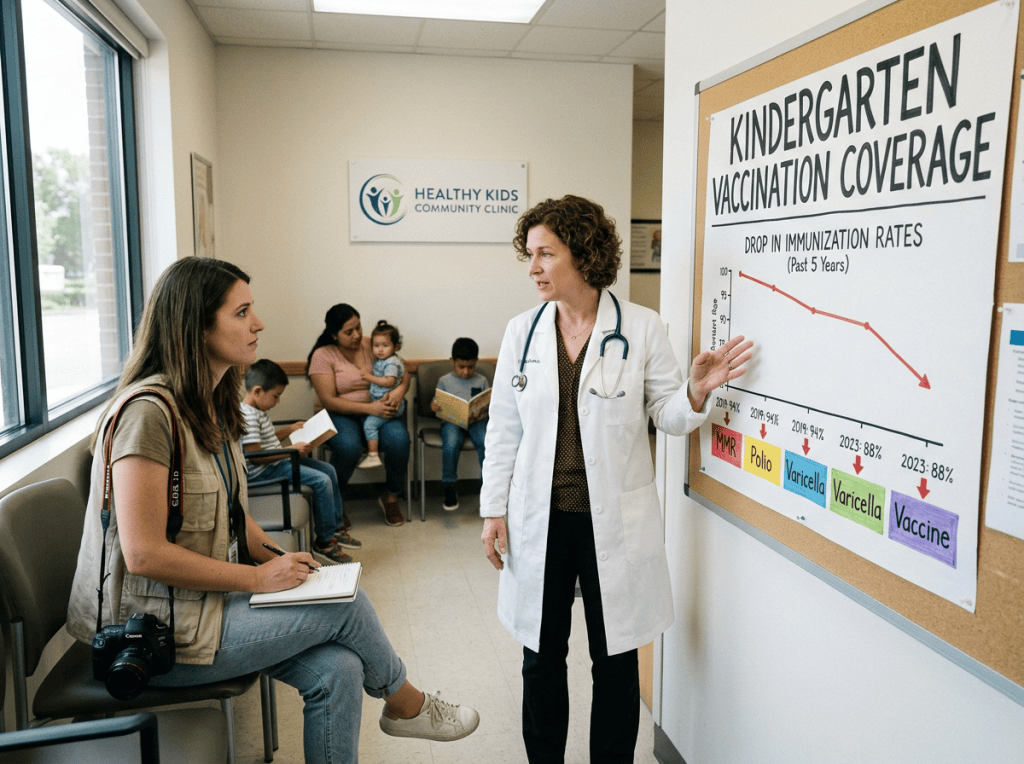
The CDC released vaccination data for children in kindergarten not too long ago, and the numbers are concerning. During the 2025-2026 school year, 4.2% of kindergartners had an exemption from one or more of the required vaccines. The year before, that number was 3.6%. About 155,000 kindergartners had at least one vaccine exemption.
Vaccination coverage also decreased. Only about 92.4% of kindergartners had received the required doses of the MMR vaccine, which protects against measles, mumps and rubella. The CDC estimates that about 280,000 kindergartners went to school without completing the MMR vaccine series.
These percentages might not seem like a huge deal right away, since more than 90% of children are still vaccinated. The problem is that diseases like measles are very contagious. Small decreases in vaccination can create schools where there are enough unvaccinated people for an outbreak to spread.
We are already seeing what that can look like in today’s world. The United States has reported more than 3,100 measles cases in 2026, which is the highest number in over 35 years.
Honestly, I think the connection between these two stories is what makes the exemption numbers important. Vaccine coverage can sound like a boring statistic until an actual disease starts spreading again.
There is also a pretty difficult balance between parents making decisions for their own children and schools doing their best to protect everyone who attends. Some students can’t receive certain vaccines because of medical reasons, which makes high vaccination levels among everyone else even more important.
The increase in exemptions shows how these decisions can become community health issues. Public health isn’t only about treating people after they get sick. A huge part of it is preventing enough people from getting sick so that an outbreak never gets started to begin with.

