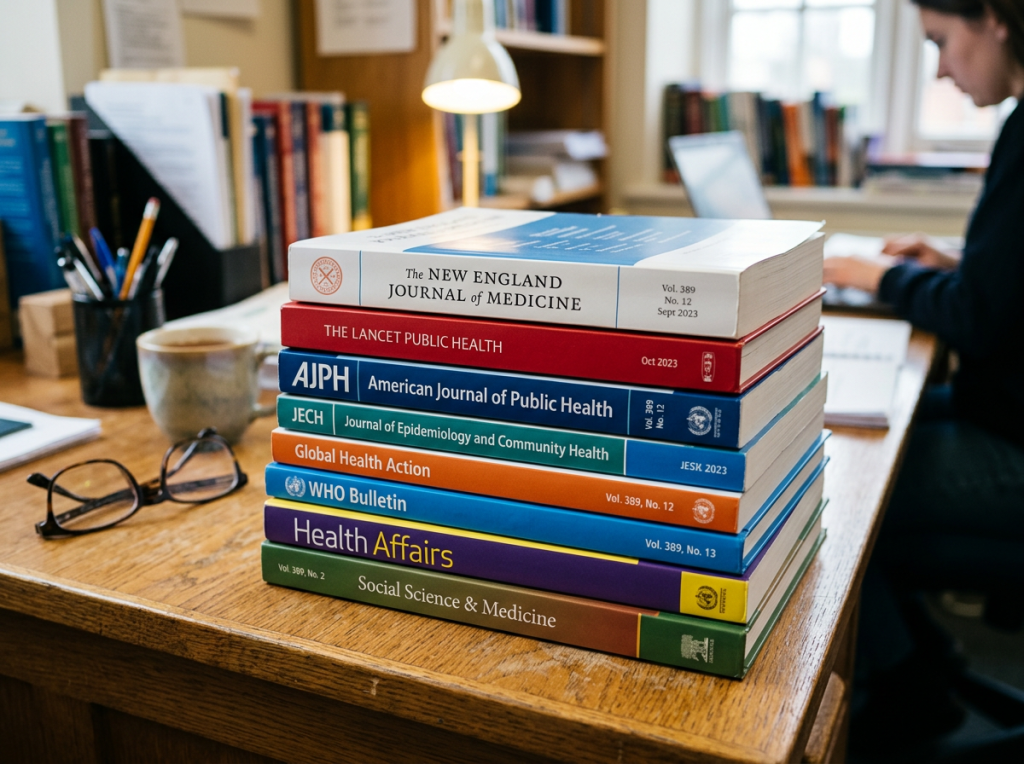
If you want to actually understand public health, it’s better to read what the people in the field read. So I started following some of the journals and reports that researchers and policymakers actually use. I figured I’d share them if anyone reading this wants to do the same.
The big ones I follow are Health Affairs, the American Journal of Public Health, and the CDC’s Morbidity and Mortality Weekly Report, usually just called MMWR. I’ve already talked about MMWR reports in a few posts. They’re surprisingly interesting once you get used to them.
Here’s an example of what I am talking about. I read a study in Health Affairs that reviewed different ways to help low-income families afford food and eat better. It found that increasing food assistance benefits, without adding a lot of restrictions, had the strongest evidence for improving food security. The diet-quality results were more mixed, which I kind of liked, because it shows the researchers weren’t overselling it.
What I like about reading these is that the real studies are way more careful than what you read on the news. They point out what worked, what didn’t, and what they still don’t know. Headlines tend to say “X cures Y,” but the actual research usually says “X helped with this part, didn’t help with that part, and we need more data.” That’s a more honest picture, and it’s taught me to be more careful about how I talk about things too.
I’m just a high school student, so I definitely don’t understand every part of these papers. They can be a bit confusing too. But you don’t have to understand all of it to learn something. Reading the summaries and conclusions has probably helped my thinking more than anything else. If you’re interested in this field, I’d really recommend just starting.

