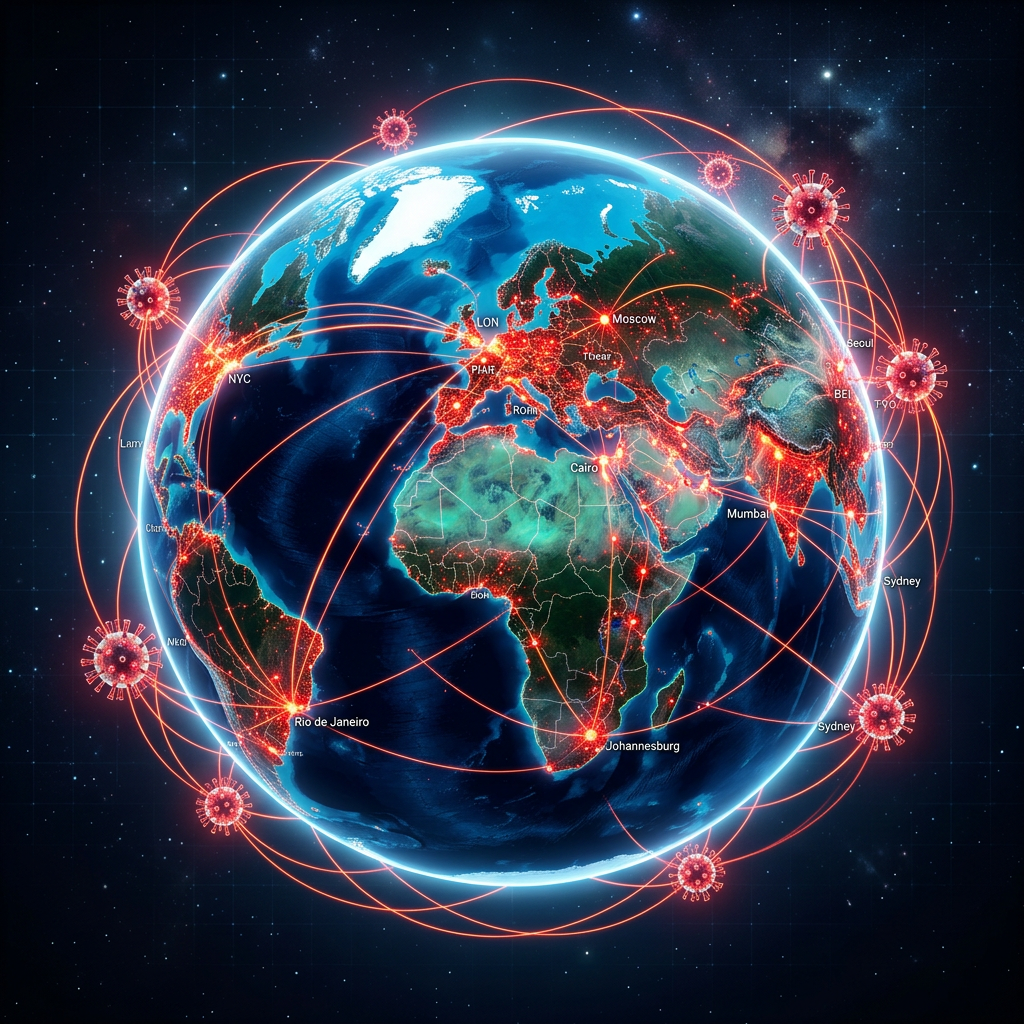
I’ve traveled to a lot of different countries with my family, and seeing poor communities changed my thinking about health. It’s easy to assume that a health problem in another country has nothing to do with us or the rest of the world, but that is not really the case.
Diseases spread, and the world now is more connected than ever. An outbreak in one place
can reach another place very fast and in many different ways, like we all learned during the Covid-19 pandemic. So helping other countries prevent and control disease isn’t just helping those countries but also helps prevent the spread and keep other countries around the world healthy.
That’s part of why programs like Gavi, the Vaccine Alliance, exist. Gavi helps get vaccines to lower-income countries that can’t afford them. According to KFF, Gavi has provided around $29 billion to support immunization in low- and middle-income countries since 2000, and the U.S. has been a big supporter. That funding helps reach kids who would be left out without it, which is the vaccine equality issue I wrote about with my family’s polio story.
The article also got me thinking about how fragile this kind of support can be. Global health funding depends on political decisions, and when that funding decreases, the people who lose out are usually the ones who need help. A disease that was almost under control can come back if the effort behind controlling it stops.
Global health is kind of like a shared responsibility. We’re all part of the same connected world, so a child going unvaccinated in another country isn’t only their problem, but the rest of the world’s as well. Helping prevent disease over in other countries is also a way of protecting people in the United States and everywhere else.
It would be nice if we did it purely because it’s the right thing to do, but even if you only care about self-interest, the results still says helping others is smart.
Article to find more information from: The U.S. Government and Gavi, the Vaccine Alliance — KFF

