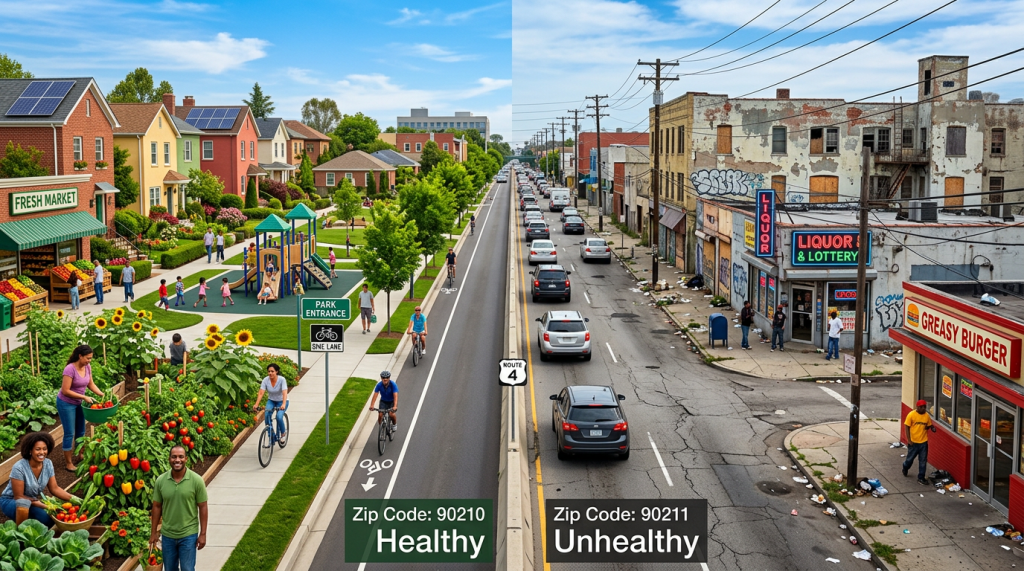
I heard this saying one time that I can’t stop thinking about: your zip code might matter more than your genetic code. It sounds dramatic, but the data actually backs it up.
The Robert Wood Johnson Foundation has done a lot of work showing how much your neighborhood or environment around you affects how long you live. In one example in these reports, 2 close neighborhoods in the same city had life expectancies that were different by over a decade. Their research shows that where you live can influence how long you live, because of differences in quality of life, such as income, housing, food access, safety, and care.
Think about how interesting it is that a person’s environment can affect their life span by that much! 2 people born around the same time, maybe with similar genes, can have totally different life expectancies just based on a few miles between where they grew up. That gap isn’t about biology; it is about the conditions of these locations and how they affect their health.
This is why health equity matters. Health equity basically means everyone having a fair shot at being healthy, no matter where they’re from. And right now, that fair shot isn’t equal at all. Some neighborhoods set people up to be healthy, and some set people up to struggle, before those people have made a single choice about their own health.
For example, the kids I coached lived in communities with fewer resources than the ones I’ve been lucky to grow up around, and you could see how that shaped their options. It wasn’t about effort or willpower. It was about what their environment did or didn’t give them.
The reason this gives me a little hope though is that it can change. Genes are hard to change or improve, but neighborhoods, food access, parks, and clinics are not. If your zip code is shaping your health, improving conditions within there is one of the most powerful things public health can do for you and your community.

