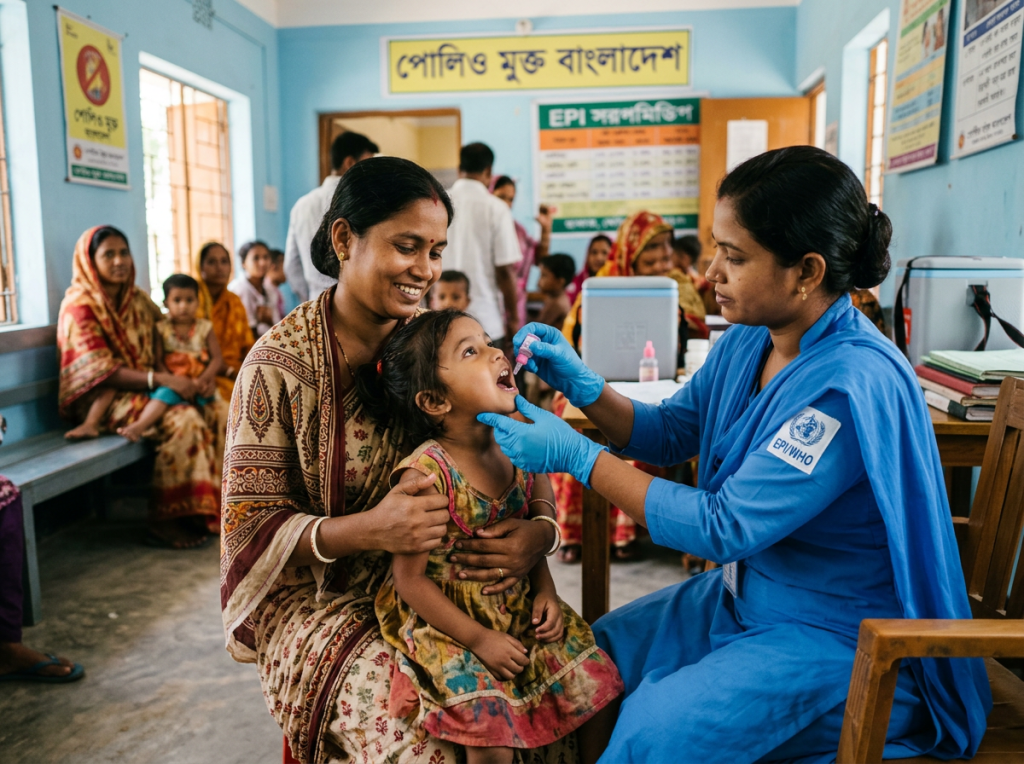
This one is a little personal. My mom grew up in Brazil, and she’s told me stories about the communities she lived in and how hard it was for some people to get basic medical care. One that stuck with me is about my great-grandmother, who was affected by polio and couldn’t get properly vaccinated because of the economic conditions where they lived.
I think about that a lot, because polio is a disease we basically don’t worry about anymore in a lot of the world. But the reason we don’t worry about it is vaccines. It wasn’t luck, it was a massive, decades-long effort.
I came across a study reported by UNICEF that put a real number on this topic. The research found that global immunization efforts have saved an estimated 154 million lives over the past 50 years. Most of those lives saved were infants. That number is honestly hard to even picture.
But here’s the thing that my family’s story shows me. Vaccines only work if people can actually get them. The science of the polio vaccine existed, but for my great-grandmother, the vaccine being available somewhere in the world didn’t matter if it wasn’t available to her. Access is everything.
That’s why I get so interested in vaccine equity, which basically means making sure everyone, no matter where they live or how much money they have, can get the vaccines that prevent these diseases. A vaccine that only reaches wealthy communities isn’t solving the global problem. It’s just moving it around.
My great-grandmother’s story is from generations ago, but there are still places today where kids can’t get vaccines that other kids take for granted. To me, that’s one of the clearest examples of why global health matters. Diseases don’t care about borders or income, but our ability to prevent them often does.
 Health Before Healthcare