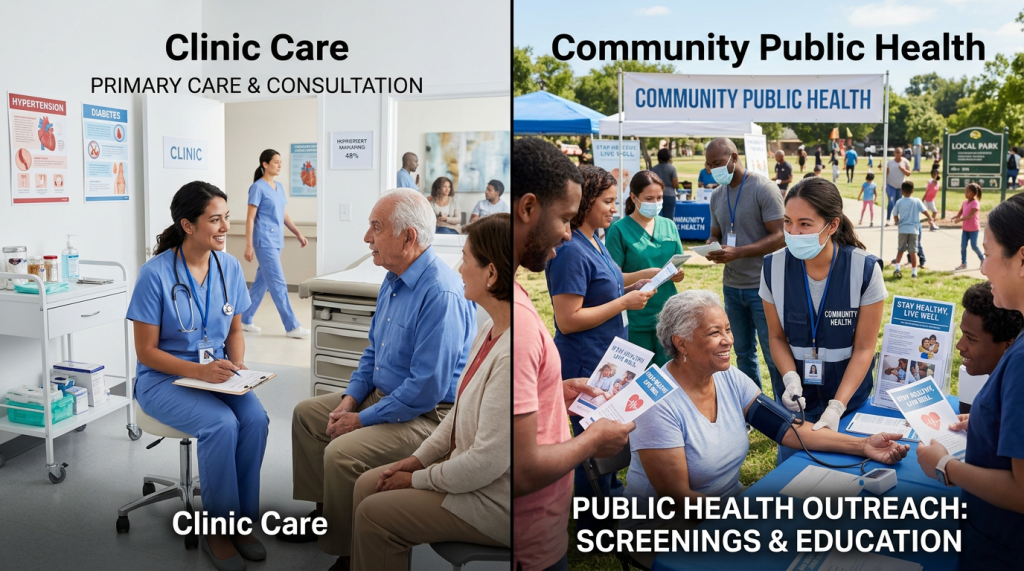
I’ve been trying to put into words the difference between medicine and global health, because for a long time I kind of thought they were the same thing. They’re not, and figuring out the difference is a big part of why I got into this.
Medicine treats individuals. A doctor sees a patient, diagnoses them, and treats them. That’s incredibly important, and I’ve seen amazing doctors do it. Global health and public health work at a larger scope of healthcare. Instead of one patient, they think about whole populations and the systems and conditions that make people healthy or sick in the first place.
A piece in Health Affairs helped this click for me. It mentioned research showing that the U.S. spends about $2 on healthcare for every $1 spent on social services, and that real improvements in our nation’s health might come less from spending on medical care and more from addressing the social conditions that shape health. In other words, we pour money into treating people once they’re sick, but maybe not enough into preventing them from getting sick.
That’s basically the whole argument of this blog, but said by experts way smarter than me.
Here’s how I think about it now. If a hundred people keep getting sick from the same polluted water, a doctor can treat all hundred of them, one by one, over and over. A public health approach asks why the water is dirty and tries to fix that, so the next hundred people never get sick at all. Both matter, but only one of them stops the problem at the source.
I still have huge respect for medicine, and I’ll probably always be drawn to the clinical side, too. But I’ve realized that the questions I care about most are the population-level ones. Why are some communities sicker than others? What factors drive these findings? What can we change so that fewer people end up needing a doctor in the first place?

