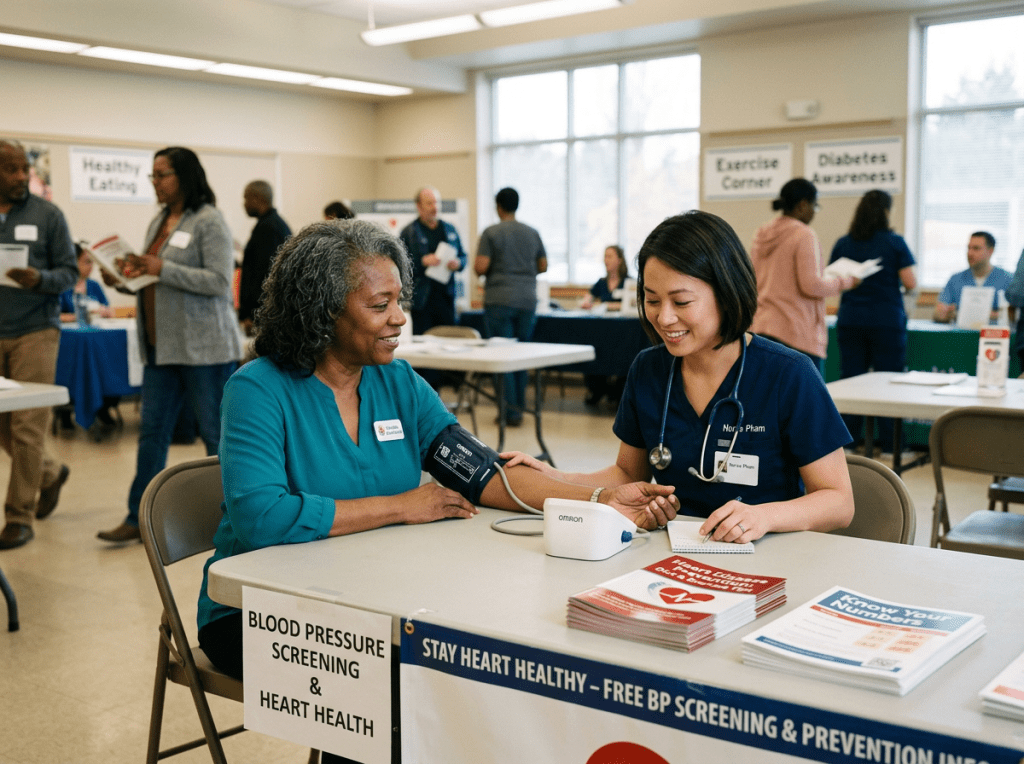
High blood pressure is one of those things that sounds routine until you realize how dangerous it is. It doesn’t really have symptoms, so people walk around with it for years and have no idea. It’s also a big risk factor for heart attacks and strokes.
What surprised me is how many people have it and don’t even know. The CDC found that around 11 million U.S. adults who actually have a regular source of healthcare still have undiagnosed high blood pressure. So these aren’t even people avoiding the doctor; they’re seeing doctors, and it’s still being overlooked.
This is interesting to me because it’s such a clear example of prevention being easier than treatment. High blood pressure can usually be managed with simple lifestyle changes if you catch it early, like changes to diet, exercise, and sometimes a cheap medication. But if it goes undiagnosed for years, it can lead to a stroke, which is way more expensive, way harder on the patient, and sometimes permanent.
This is also one of the topics I’m hoping to dig into during my clinical research program at UCF next summer. Cardiology is one of the areas the program covers, and I keep coming back to the same question: why do some communities have so much more undiagnosed high blood pressure than others? A lot of it comes down to access. If you don’t have a regular doctor, or you can’t take time off work, or there’s no clinic near you, then nobody is checking your blood pressure in the first place.
Something as small as a free blood pressure check at a community center could catch a problem years before it becomes an emergency. To me, that’s “health before healthcare” in action.
 Health Before Healthcare